


A Song of Ice and Fire board game – guide to getting started via Gamedungeon.se
Do you want to play A Song of Ice and Fire: The Miniatures Game (the ASOIAF board game) but wonder where to start, which faction suits you, and what you actually need to get going? You’re not alone. The game has become a favorite among Swedish strategy and miniatures game enthusiasts thanks to clear rules, strong thematic elements, and cinematic battles where every choice on the board can turn the tide of the match.
In this guide, you’ll get a quick, practical entry point: how the core rules work, how the NCU system adds political play alongside the battle, and how to choose the right starter box without making a bad purchase. We’ll also cover army building, common beginner mistakes, and how you can gradually find the right products at Gamedungeon.se to build an army that is both fun to play and strategically strong.
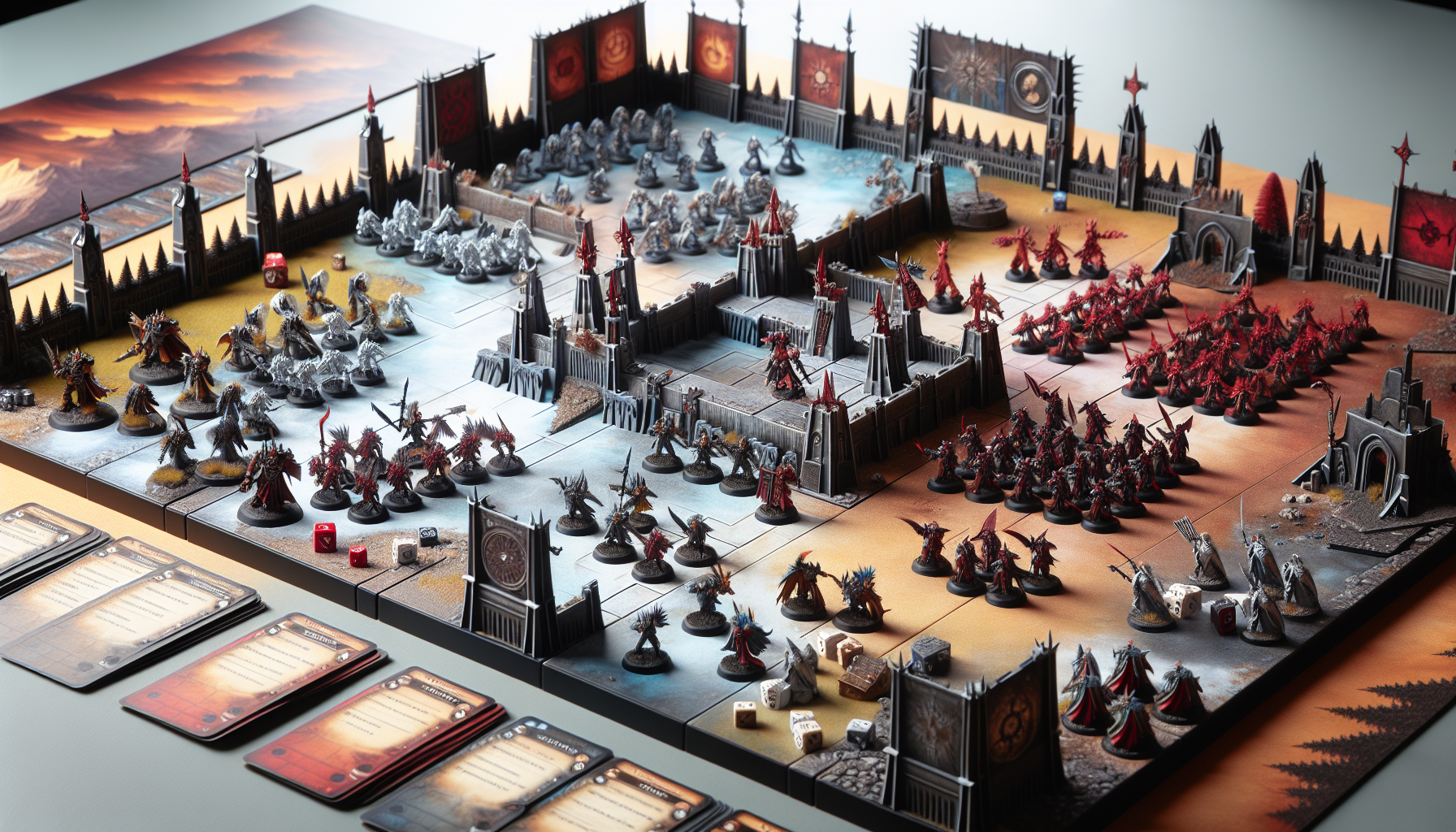
A Song of Ice and Fire: The Miniatures Game (often called the ASOIAF board game) is a rank-and-file miniatures game where you lead an army in clear formations, but with a modern feel: quick activations, strong characters, and scenarios that reward smart decisions rather than just the most dice. What is often highlighted in top-ranked content is that the game manages to be easy to get into, while also having a strategic depth that makes you want to refine lists and matchups over time.
A tactical mix of battlefield and narrative
The core is a clear "wargame on the table" with objectives, flanking, and morale – but with heroes/attachments that leave their mark on each unit and create dramatic moments recognizable from the theme:
-
Rank-and-file with real choices: positioning, charges, and formations often determine more than raw damage.
-
Scenarios with objectives: you win by playing the mission, not just by tabling the opponent.
-
Asymmetrical factions: each house has a clear identity and its own "game plan thinking."
-
NCU and tactics cards: the political game alongside the battle provides control and tempo – and makes rounds more interactive.
Unique angle: Many guides mention rules and factions, but miss that ASOIAF often feels "more board game" than classic miniatures games, precisely because of objectives and the NCU system. This makes it perfect for groups who enjoy both strategy and clear win conditions.
Who the game is especially well-suited for in Sweden
ASOIAF is a strong choice for both beginners and veterans. Beginners appreciate the lower hobby threshold (fewer models than many alternatives and clear components), while experienced players get hooked on balance updates, list building, and an evolving meta.
In Swedish gaming culture, it also works unusually smoothly: easy to play a match on a game night, scale from casual to tournament, and build a local scene through clubs. When you then want to compare starter boxes and expansions, it's practical to gather your purchases via Gamedungeon.se and filter by faction and accessories without making a wrong buy.
Section 2: How the game works – core rules, turn order, and the NCU system ("the politics")
What makes A Song of Ice and Fire: The Miniatures Game so easy to get into (but hard to master) is that everything is built on clear, recurring decisions: you activate a unit, perform its actions, and pass the turn. Simultaneously, a parallel "power game" takes place via NCUs (Non-Combat Units) on the tactics board. This combination of rank-and-file combat and political control is a recurring reason in top-ranked guides for why the game feels both thematic and tactically deep.
Turn order and core flow – what you actually do each activation
In practice, you can think this way when learning the basics:
-
Activate one unit at a time: You take turns choosing a unit and performing its actions, which creates a clear pace and reduces "downtime."
-
Maneuver + positioning: Movement, turns, and maintaining formation are central – small angle adjustments can determine whether you get a flank or are flanked.
-
Attack and morale: After damage, panic tests (morale tests) often follow. Many matches are won by combining damage with morale pressure, not just by "spike rolling."
-
Terrain and line of sight: Line of sight and blocking terrain determine which charges and attacks are even possible. Practice reading the board before the first round.
Unique rule of thumb that many miss: play as if objectives are a third player. If you only chase combat, you often lose points even when you "win" fights.
NCU and tactics cards – where the game is often decided (without feeling random)
The NCU part is the game's "chessboard": you take zones that grant buffs, control, or resource advantages, while also locking out your opponent. This is also where commander cards and your tactics deck come in and define your playstyle.
Three mistakes that can make the game feel random – and how to avoid them:
-
Premature card use: Save reactive cards until you know if the attack/charge is actually happening.
-
Overcommit in the middle: If you leave the sides open, you invite flank/rear attacks and lose objectives.
-
Ignoring the NCU game: An opponent who controls the zones gets "free" tempo each round.
Once you see the connection between positioning on the board and control on the NCU board, the ASOIAF board game starts to feel consistent, predictable, and very rewarding.
Section 3: Choose your faction – comparison of playstyle, difficulty, and feel on the board
One of the most common questions in top-ranked guides is: "Which faction should I start with?" In A Song of Ice and Fire: The Miniatures Game, your faction choice affects everything – from how your army moves and fights, to how you win objectives and use tactics cards. The right choice makes learning more enjoyable, list building more logical, and your first matches less frustrating (and this is often where new players otherwise lose interest).
Faction identity – short, clear, and playable
When comparing factions, it's smart to start from how you want to win: tempo, control, endurance, or mobility. Here's a practical quick guide that is often missing from many articles:
-
House Stark: high tempo and offensive pressure; rewards initiative and aggressive trades
-
House Lannister: control and morale/panic; often wins by wearing down the opponent over time
-
Baratheon: durability and "anvil" play; strong lines that hold objectives for a long time
-
Targaryen: mobility and combinations; requires planning but can create explosive swings
-
Night’s Watch: elite quality and stability; fewer models but reliable activations and a good "toolbox"
-
Free Folk: hordes and board control; many activations, requires good positional play
-
Greyjoy/Martell (if available): tricks, mobility, and timing; often more "technical" for new players
The unique point: choose a faction whose standard plan matches you. If you hate waiting, don't choose a slow attrition faction just because it's "strong in the meta."
Match faction to your playgroup (casual vs competitive)
In Swedish club environments and game nights, the meta often shifts between cities. A good rule of thumb is to ask: do you mostly play narratively or "tournament-adjacent"?
Narrative/casual: prioritize theme, favorite characters, and clear playstyle (you'll have more evenly matched games).
Competitive: choose a faction that gives you clear win conditions and trains fundamental principles (objectives, activation order, NCU timing). This makes it easier to later expand with more boxes from Gamedungeon.se without making bad purchases.
Section 4: Smart start – the best way in with starter boxes, essentials, and budget plan
The fastest way to get started with A Song of Ice and Fire: The Miniatures Game is almost always a starter box. Top-ranked buying guides usually agree on why: you get a playable core (often around 30–40 points depending on content), a clear faction identity, and everything you need to play several matches before you even think about "what should I buy next?" For Swedish players, it's especially convenient – you can show up at a game night with a box and be playing the same evening, without getting stuck in the hobby threshold.
What a starter box gives you (and why it's the best value for money)
-
Immediately playable army core: several infantry units + characters/attachments that show how the faction "thinks" on the board.
-
Clear rules in practice: the starter box forces good learning of activations, objective play, and panic tests without drowning you in special rules.
-
Better synergy than spontaneous purchases: top lists and guides often warn against buying "cool" boxes first; the starter box provides a basic plan to build upon.
Unique insight: see the starter box as your "meta test." Play 3–5 matches, write down what's missing (more durability? more mobility? more NCU choices?) and let that guide your next purchase – not hype or isolated match results.
Essentials and two smart purchasing paths (without misbuys)
In addition to the starter box, small but important accessories are often recommended: extra dice, measuring tools, and practical storage for cards and tokens (this saves time and reduces mistakes). If updated cards/FAQ are relevant in your group, prioritize a way to keep your list current.
-
Budget 500–1000 SEK: starter box + dice + simple card storage → play immediately and learn the basics.
-
Build towards 30–40 points: starter box + a box that fills a clear role (anvil/hammer/screening) + 1–2 NCU/characters for more control on the tactics board.
On Gamedungeon.se, it's smart to filter by faction, starter box/expansion, and accessories – and to read product descriptions based on their role in the army, so you avoid duplicates that don't strengthen your game plan.
Build a strong army – roles, synergy, and common list-building pitfalls
Building a good army in A Song of Ice and Fire: The Miniatures Game is less about stacking the "strongest possible" units and more about creating a clear game plan. Top-ranked guides often return to the same core: you win through activations, objective control, and smart use of tactics cards – not just by hitting the hardest. When choosing boxes at Gamedungeon.se, the goal is therefore to supplement the starter box with roles that make the list stable in multiple matchups.
Building blocks of a list build (30–40 points)
-
Unit roles ("anvil/hammer/screen"): Mix a durable anvil that can hold an objective with at least one hammer that can decide a flank, plus a cheap screen that disrupts charges and takes up space.
-
Commander + tactics deck: Choose your commander based on how you want to win – tempo, control, or attrition. Your deck is often the "engine" of the list, so build around the cards rather than the other way around.
-
Attachments: A well-chosen attachment is often the most cost-effective upgrade. Aim for things that provide reliability (e.g., better morale, extra hits, rerolls) or clear role reinforcement.
-
NCU setup: At least 2 NCUs in many formats is a good rule of thumb. They not only give you bonuses – they also control timing and force difficult choices for the opponent on the tactics board.
A practical way to test your synergy is to write down two sentences: 1) "How do I score points in rounds 1–2?" 2) "How do I win if I fall behind in damage?" If you can't answer clearly, you often lack either board presence (too few units/activations) or a tool to turn the tide via cards/NCU.
Common pitfalls – and a quick checklist before a match
Many beginners get stuck buying "cool elite boxes" and end up with an army that hits hard but doesn't get to play the scenario. Specifically avoid: too few activations, too narrow damage profile (e.g., struggles against high armor or hordes), and ignored morale/panic (both offensively and defensively).
Before each match, do a 30-second check:
-
Can I hold two objectives for three rounds?
-
Do I have a plan to threaten flanks/rear?
-
Which NCU zone do I most often need – and how do I stop my opponent from taking it?
With this framework, it also becomes easier to shop smart at Gamedungeon.se: you buy the next box to fill a specific role, not because it "looks strong."
Game strategy that wins matches – placement, objectives, and timing
In A Song of Ice and Fire: The Miniatures Game, many matches are decided before the first sword swing: by deployment, the tempo of the first round, and how well you prioritize objectives. Top-ranked guides often return to the same core: stop chasing "big slaughter matches" and start playing for points. When you combine that with smart tactics card timing and a plan for the NCU board, the game becomes significantly less "random" – and much more controllable.
The opening: deployment and the first two rounds
-
Set a plan for the center point: Already in deployment, ask yourself which unit will hold an objective (anvil) and which will take it (hammer). This way, you avoid overcommitting in the center.
-
Protect the flanks without parking: Place cheaper units or mobile threats so the opponent doesn't get free flank/rear attacks. It's often enough to "threaten" a flank to control movements.
-
Play for activation advantage: If you have more activations, you can "wait out" the opponent's key units. If you have fewer, you need to secure points early and force unfavorable choices.
What many articles miss is how much you can gain by "losing correctly." If a cheap unit is tied up but at the same time locks an enemy from reaching objectives for two rounds, it's often a net win – especially in scenarios where points tick every round.
Timing that separates good from truly great players
-
Use tactics cards to create, not save, situations: Play cards when they build a "two-step move" (e.g., secure zone → attack with bonus), not just as a panic button.
-
Switch between micro and macro: Micro = angles, distances, charge threats. Macro = points race and win condition. Write down your macro plan in one sentence: "I win by holding two objectives and wearing down his elite."
-
Identify the opponent's win condition: Ask: do they want to win via attrition, control, or quick points? Your combat choices should always disrupt that plan.
When you start to measure out "next round's" positions and plan your NCU activations as part of the same tactical whole, your decisions become consistent – and victories come as a natural consequence.
Section 7: Hobby, upgrades, and community – get more out of ASOIAF with Gamedungeon.se
A major reason why A Song of Ice and Fire: The Miniatures Game becomes a long-term hobby is that it's as much about "playing" as "collecting." Top-ranked guides often emphasize how easy the game is to get into compared to heavier miniatures games – but that you can still grow into painting, terrain, and tournament play at your own pace. Here's a practical way to get more value from your boxes (and make every game night smoother).
Get started with painting and "tabletop ready" quickly
To avoid the army becoming an eternal project, think in simple steps:
-
Aim for the 3-color method: base color, wash, and highlight on the largest areas – that goes a long way on the gaming table.
-
Batch paint per unit: do 12–13 figures at a time; you get a consistent result and save time.
-
Basing that elevates everything: gravel + drybrush + a tuft of grass gives "Westeros feel" without hassle.
-
Protect your work: a matte varnish makes the figures durable for frequent play in clubs or at home.
What is often missing from other articles is the timeline: set aside 60–90 minutes per week and lock the goal to "one unit finished," not "the whole army finished." This keeps motivation up.
Transport, updates, and Swedish community
As you start playing more often, logistics become as important as list building:
-
Storage/transport: magnetized bases or foam are worth it if you commute to game nights.
-
Cards and tokens: sleeves and a simple sorting box reduce "start-up hassle" before a match.
-
Keep track of new cards/FAQ: see it as fifteen minutes a month – then you avoid unpleasant surprises at tournaments.
Unique angle for Sweden: build a beginner-friendly game night with three fixed point levels (e.g., low/medium/standard), a loan list per faction, and a scenario that prioritizes objectives. This way, the scene grows locally – and you can supplement your army step by step via Gamedungeon.se (filter by faction, expansion, and accessories) instead of buying "everything at once."
Frequently Asked Questions (FAQ)
Q: What do I need to buy to get started with the A Song of Ice and Fire board game?
A: The easiest way is a starter set for your faction – it usually contains everything you need to play (units, dice, measuring tools, tokens, and basic rules). To make the first few games smoother, it's often worth supplementing with extra dice and a good way to keep track of cards/tokens. My tip: play 2–3 games with just the starter set before buying more boxes, so you can figure out what playstyle you actually enjoy.
Q: How long are the games and what point level should beginners play at?
A: A typical game often takes 1.5–2.5 hours depending on experience and point level. For beginners, 30 points is perfect: enough units to understand objectives and the NCU game, but not so many that each round takes too long. Once you feel confident, you can move up to 40 points (common in more organized play).
Q: What are NCUs and why does "politics" feel so important?
A: NCUs (Non-Combat Units) are characters that affect a separate "tactics board" and provide effects such as healing, control, card draws, or debuffs. Many guides emphasize this because new players otherwise focus too much on combat. The key is to see NCUs as your resource economy: they help you win objectives, time your attacks, and "save" a round when the dice go against you.
Q: Which faction is best for beginners?
A: "Best" depends on what you want to do on the table. Generally, factions with a clear plan (e.g., endurance/attrition or straightforward aggression) are perceived as more forgiving, while factions requiring precise timing and positioning can be more difficult initially. Choose a faction based on playstyle and theme rather than "tier lists" – the meta can differ between Swedish clubs and tournaments.
Q: What are the most common beginner mistakes that make the game feel random?
A: Three classics: 1) Playing tactics cards too late (you miss windows where they are strongest), 2) Overcommitting in the middle and forgetting objectives, 3) Underinvesting in NCUs/activations, which makes you lose control of the tempo. The solution is to plan a simple win condition: "hold two objectives for three rounds" and let the battles support that plan.
Q: Do I need to paint the miniatures, and how do I get an army "tabletop ready" quickly?
A: You don't need to paint to play, but it greatly enhances the experience. The fastest way to be tabletop ready is: primer + base colors + wash + quick highlight, and a simple base (e.g., texture paste/tufts). It's better to paint one unit at a time rather than starting everything at once – that way you'll have a playable army faster and stay motivated.
Q: How do I find the right ASOIAF products on Gamedungeon.se without making a wrong purchase?
A: Filter by faction and start by asking: "Am I missing a role?" (e.g., objective holder, hammer, anvil, or screening). Then read the box's purpose: does it provide more activations, better NCU choices, or a clearer game plan with your commander? A good trick is to buy incrementally: one unit that fills a clear gap, play a few games, and then upgrade.
Next step: embark on your first campaign in Westeros
A Song of Ice and Fire: The Miniatures Game stands out by combining fast activations, clear rules, and scenario-based objectives with the unique "political" dimension via the NCU system. When you understand the interaction between units, commanders, and tactics cards, the game becomes less random and more planned: positioning, timing, and control of point-deciding zones. Add to that the asymmetry of the factions and a balance that is updated over time, and you get a miniatures and strategy game that lasts – whether you play at home, in a club, or in tournament format.
Want to get started right away? Choose a faction that matches your playstyle, buy a starter set, and play three games with the same list before you start chasing new expansions – it's the fastest way to make stable decisions and improve your game. After that, you can gradually build with a unit box for a clear role and 1–2 NCUs that strengthen your game plan. Explore the range on Gamedungeon.se for starter sets, expansions, and accessories to complete your army without wrong purchases.