


Lord of the Rings Living Card Game (LCG) – Your Complete Guide via Gamedungeon.se
Do you want to step right into Middle-earth, but are tired of expensive collectible card games and random booster packs? Lord of the Rings: The Card Game (LCG) offers a cooperative adventure card game where you and your friends take on the forces of Sauron together – without loot boxes and without the stress of "keeping up with the meta". Here you get a well-thought-out Living Card Game, where every product is complete and transparent from the start.
In this guide, we'll show you how to easily get started with Lord of the Rings LCG via the Swedish store Gamedungeon.se. You'll get concrete buying tips, beginner-friendly deckbuilding advice, recommended expansion order, and smart solutions for storage and accessories. The goal is for you, whether you're completely new to card games or an experienced board gamer, to be able to build your own campaign in Middle-earth – step by step, in a way that suits both your wallet and your gaming group.
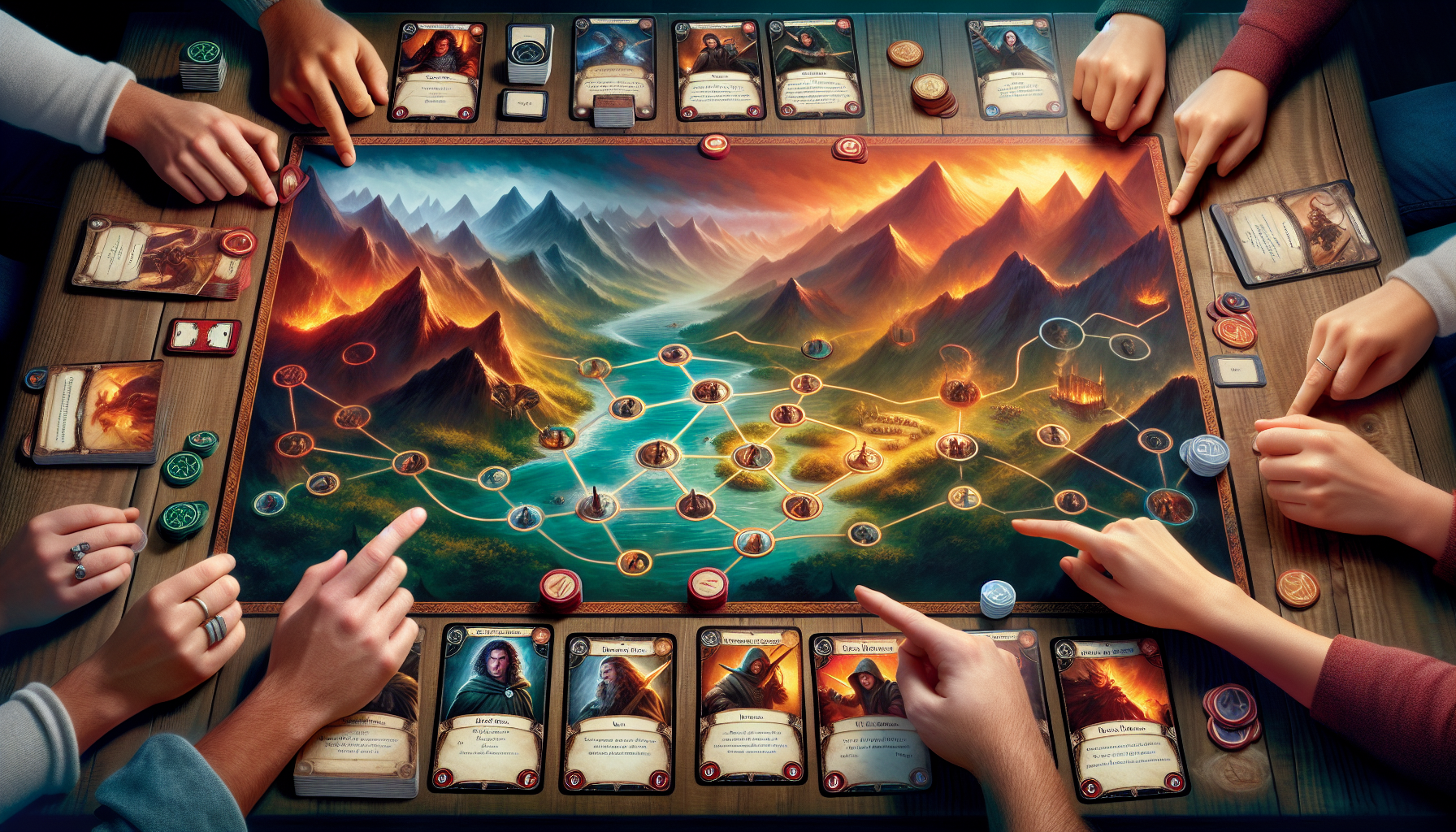
Lord of the Rings: The Card Game is a so-called Living Card Game (LCG), which means you get fixed cards in each product instead of random booster packs. For Swedish players, this means less lottery, more control, and a significantly kinder cost over time than classic collectible card games like Magic: The Gathering. You always know exactly which cards you're buying – perfect if you want to build decks methodically and plan your purchases at, for example, Gamedungeon.se.
What does Living Card Game mean compared to TCG/CCG?
In an LCG, the game is released in core sets, deluxe expansions, and smaller packs where the content is completely transparent:
- No blind packs: each box contains the same cards for all players
- No secondary market stress: you don't chase expensive “chase cards” on the secondary market
-
Focus on gameplay experience: the design revolves around scenarios, campaigns, and cooperation rather than tournament meta
This makes Lord of the Rings LCG more like a cooperative board game than a classic dueling card game. Many articles mention this, but often fail to emphasize how nice it is for new players to be able to buy the "right" product directly, without the fear of having "bought the wrong booster box". Gamedungeon.se has an advantage here through clear categorization and product descriptions in Swedish.
Theme, gameplay feel, and why it suits both beginners and veterans
Lord of the Rings LCG is set in Tolkien's Middle-earth where 1–4 players cooperate against the game itself. You choose heroes, build decks, and tackle scenarios filled with enemies, dangerous locations, and story-driven quests. Central elements are heroes, encounter deck, resources, and threat level which together create an intense but rewarding experience.
The game works excellently solo, where you have full control over tactics, but also scales really well for more players with role distribution and synergies between decks. The combination of strong theme, deep strategy, and a transparent LCG setup means that Lord of the Rings LCG is both easy for beginners to get into and at the same time has immense depth for experienced card players who want a long-term hobby – something we will build on in the rest of the article.
How to get started with Lord of the Rings LCG via Gamedungeon.se
Starting with Lord of the Rings: The Card Game can feel overwhelming when you see all the boxes, cycles, and campaigns. Therefore, it's important to have a clear starting point and a simple purchase plan. Here we'll go through exactly what you need to get started – and how to step by step use Gamedungeon.se to find the right products without buying "wrong" things unnecessarily.
The right starting product and first steps on Gamedungeon.se
For almost all new players, the Revised Core Set is by far the best starting point:
-
Start with the core set: Contains everything you need for 1–2 players, several scenarios, and pre-built decks to play right out of the box.
-
For 3–4 players: Consider two core sets for more copies of important cards and better balance with more players.
-
Create an account at Gamedungeon.se: Gives you order history, wish lists, and easier monitoring of products that are out of stock.
-
Find the LOTR LCG category: Use the search field (“lord of the rings lcg” or “the card game”) and filter by category/brand to see only relevant products.
Once you know you like the game, you can slowly build on with expansions. A good approach is to add products to a wish list on Gamedungeon.se directly, so you have a clear plan even if you don't buy everything at once.
Concrete shopping lists for beginners (1–4 players)
To make the start as smooth as possible, you can base it on the following simple packages, adapted to how many of you usually play:
-
For 1–2 players:
- 1× Lord of the Rings LCG Revised Core Set
- 1× pack of card sleeves for heroes and most used cards
-
1× simple storage box (can also be a generic “deck box”)
-
For 3–4 players:
- 2× Revised Core Set (provides more copies of key cards and better decks)
- 2–3× packs of card sleeves
- 1× larger card box or sorting solution
- 1× playmat if you want to enhance the feel and organize the table
This way you avoid getting drowned in choices. You get a ready-made, well-thought-out starter kit that is enough for many hours of play – while building a stable foundation for future purchases on Gamedungeon.se.
Overview of card types and mechanics – how the game works in practice
To get the most out of Lord of the Rings: The Card Game, it's not enough to just know the theme – you need to understand how the card types and central mechanics interact. Here we go through the basics in a way that many top articles miss: with clear examples and concrete advice you can use directly at the game table.
Card types and spheres – the foundation of every deck
The most important player cards are:
-
Heroes – your main characters; they provide resources each round and define which spheres you can play cards from.
-
Allies – reinforcements that help with questing, combat, and support, often more "one-shot resources".
-
Events – surprises played from hand for strong, temporary effects (e.g., saving a hero, canceling damage).
-
Attachments – equipment, titles, and abilities that permanently enhance heroes or allies.
-
Encounter cards – enemies, locations, treacheries, and quest cards that form the game's opposition (encounter deck).
In addition, there are the four spheres:
-
Leadership – resources, general buffs, many allies.
-
Tactics – combat, damage, defense.
-
Spirit – questing, threat level control, canceling negative effects.
-
Lore – card draw, healing effects, control and tricky tools.
A common beginner's mistake is to spread oneself across too many spheres. Focus on 1–2 spheres initially for stable resource access and clear playstyle.
Round structure, threat level, and practical example
A typical round can be described simply as follows:
-
Resource and Card Phase – each hero gains 1 resource, you draw 1 card.
-
Planning Phase – play allies, attachments, and some events with your resources.
-
Questing – send heroes/allies on quests; compare your willpower with the encounter deck's threat to see if you advance in the quest.
-
Encounter Phase – new encounter cards are revealed, enemies can engage with players.
-
Combat Phase – enemies attack, you defend and fight back with your characters.
-
Refresh Phase – cards are readied, threat level increases by 1, and a new round begins.
Threat level (threat) is crucial: if it reaches 50, you are eliminated, and it also determines when enemies jump from the "shadows" and attack. A concrete tip is to always have some form of threat reduction (often in Spirit) or focus on fast questing so that the scenario ends before the threat gets too high.
By playing a few practice rounds with just the core set and focusing on one thing at a time – first questing, then combat – you'll quickly learn how the card types are interwoven. The next step will be to fine-tune your decks with specific cards that you can easily find via filters and search on Gamedungeon.se.
The best way to build your first deck – deckbuilding for beginners
Building your first deck in Lord of the Rings: The Card Game can feel overwhelming – especially when you see how many cards and expansions there are. The key, which top-ranked guides often emphasize, is to start simple and focused. With some clear guidelines and smart use of the sorting and search function at Gamedungeon.se, you can quickly get a stable beginner's deck that actually completes scenarios, not just looks thematic on the table.
Basic principles: focus and simplify
A good first deck is based on a few simple but important decisions:
-
Choose 2 spheres: For example, Spirit + Tactics for questing and combat, or Leadership + Lore for resources and support.
-
Choose 3 complementary heroes: One who is good at questing, one who can fight, and one who provides resources/support. Example idea: a Spirit hero for willpower, a Tactics hero for combat, and a Leadership hero for extra resources.
-
Aim for 50 cards in the deck: This is the standard size and makes your most important cards easier to draw consistently.
-
Balance in card types: A rule of thumb is around 20–25 allies, 10–15 events, and 8–12 attachments depending on strategy.
Start with the pre-constructed decks in the core set, play a few games, and note which cards you like best. Then you can start replacing weak cards with better alternatives you find using the filters on Gamedungeon.se (e.g., by sphere, type, or expansion).
Example of a starting deck and how to improve it
A simple beginner idea might be a Spirit/Leadership deck that focuses on safely completing quests: many allies with high willpower, a few strong fighters, healing, and card draw to keep the engine running. After a couple of scenarios, you might notice that you often die due to combat – then you go back to your deck and:
- swap in more defensive allies or attachments that increase defense/vitality
- add cheap events that cancel attacks or reduce threat level
- remove expensive cards you rarely get to play
Here, many beginners make the mistake of immediately buying several expansions randomly. A smarter way is to start from what you're missing in your current deck and then use Gamedungeon.se to find specific expansions that strengthen your playstyle – for example, a cycle with more Spirit heroes if you like quest-focused play. This way, both your deck and your collection grow purposefully, without you drowning in cards you never use.
Expansions and campaigns – in what order should you buy everything?
Once you're hooked on Lord of the Rings: The Card Game, the next big question arises: in what order should I buy expansions and campaigns? The product line is extensive, and many players testify that an incorrect purchase order can make the game unnecessarily difficult or messy. Here you'll find a structured path forward, with concrete recommendations and how Gamedungeon.se can help you plan your collection smartly.
Overview and smart purchase order
A typical LOTR LCG path after the core set might look like this:
-
Step 1 – Core set + beginner-friendly campaign: Start with the revised core set and then a campaign/cycle known to be relatively forgiving (often the earliest Mirkwood scenarios in modern box form).
-
Step 2 – Deluxe expansion + accompanying adventure packs: Choose a theme you like, e.g., Rohan or Gondor, and buy the deluxe box followed by the associated cycle. On Gamedungeon.se, you can filter by cycle to see everything that belongs together.
-
Step 3 – Campaign boxes with higher difficulty: Once you've got the hang of the rules and have more cards for deckbuilding, you can tackle tougher campaigns and later cycles.
A practical tip is to always ask yourself: "Does this box offer both fun scenarios and useful player cards for multiple decks?" Most top-ranked guides highlight value per card as a key concept – something you can weigh in when comparing products on Gamedungeon.se.
Plan your collection with the help of Gamedungeon.se
To avoid spending your entire gaming budget at once, it's wise to make a 3–6 month purchase plan. A simple setup could be:
-
Month 1: Core set + card sleeves, start playing all core scenarios.
-
Month 2: The first campaign box or deluxe expansion you thematically like most.
-
Months 3–4: Supplement with 2–4 adventure packs linked to the same cycle for a cohesive story.
-
Months 5–6: Next campaign/theme + any accessories (storage, playmats).
On Gamedungeon.se you can:
-
Filter by cycle and type (deluxe, adventure pack, campaign box) to see what's missing from your collection.
-
Build a wish list and check items off as you buy them, reducing the risk of duplicates and impulse purchases.
By combining a clear purchase order with the store's filtering and wish list functions, you get a collection that grows logically, follows the Lord of the Rings theme, and provides maximum gaming enjoyment for every Krone invested.
Solo, two-player mode, and gaming group – how to get the most out of LOTR LCG
Lord of the Rings: The Card Game is designed for 1–4 players, but the experience changes significantly depending on how many people are at the table. To truly get the most out of your collection from Gamedungeon.se, it's worth thinking strategically about solo, co-op with a friend, and larger gaming groups – both when building decks and when choosing scenarios and expansions.
Solo vs. multiple players – what suits you best?
-
Solo (1 player): High control, quick setup, but often tougher difficulty. Requires a more all-round deck that handles questing, enemies, and threat level.
-
Two players: The "sweet spot" many top-ranked guides highlight. You can specialize decks (e.g., a quest-focused Spirit/Lore and a combat-focused Tactics/Leadership) and still keep the game relatively fast.
-
Three–four players: Most social and thematic, with crazy combos and roles that feel like a real adventure party – but rounds become longer and tableaux larger.
A practical tip is to consider how you mostly play when you're shopping at Gamedungeon.se. If you mostly play solo, campaigns with a clear difficulty curve might be better, while a gaming group often enjoys scenarios with many enemies and opportunities for role assignment more.
Roles, difficulty, and organized game nights
For more players, the game is best when you clearly assign roles:
-
Quest deck: Lots of willpower, threat control, and card draw (often Spirit/Lore).
-
Combat deck: High attack/defense, weapons, and shields (often Tactics/Leadership).
-
Support deck (for 3–4 players): Focus on resources, healing, ready effects, and global buffs.
Adjust the difficulty by choosing simpler scenarios at the beginning, removing a particularly nasty encounter card, or playing with a house rule for an extra mulligan. When planning a LOTR LCG night, you can place an order together on Gamedungeon.se: a new campaign box, some adventure packs, and extra card sleeves, so everyone can have their own protected deck. This way, you not only build a strong adventure party – you also build a shared, long-term Middle-earth hobby.
Accessories, storage, and long-term hobby – build your own Middle-earth at Gamedungeon.se
The accessories you choose for Lord of the Rings: The Card Game determine how smooth, durable, and enjoyable your gaming experience will be in the long run. Top-ranked guides often highlight rules and expansions – but underestimate how much the right sleeves, boxes, and organization actually affect the desire to pull out the game for "just a quick scenario round". Here we go through how you, with the help of the assortment on Gamedungeon.se, can build a practical, neat, and long-term sustainable Middle-earth collection.
Essential accessories for a smooth LOTR LCG experience
-
Card sleeves:
Protect both player cards and the encounter deck. Prioritize: - Quest and campaign cards (often handled)
- Heroes and key allies you want to play with for many years
- Preferably use color-coded sleeves per sphere for quick setup
- Storage boxes and sorting:
- A sturdy cardboard or plastic box with dividers goes a long way for a beginner collection
- For larger collections: dedicated LCG boxes with space for thousands of cards and vertical storage
- Tokens, markers, and playmats:
- Clear resource and damage tokens speed up each round
- A playmat with zones for quests, enemies, and player cards makes rules and structure more intuitive, especially for new players
By starting simple – a pack of sleeves, a decent box, and a set of tokens – you immediately get a more "premium" feel at the table, without the cost spiralling as it does in many other card game hobbies.
How to organize your collection and plan for the future
To prevent LOTR LCG from becoming overwhelming as your collection grows, structure is key. An approach that often works better than what top lists suggest is to combine thematic sorting with game-mechanical sorting:
- Sort player cards by sphere (Leadership, Tactics, Spirit, Lore) and within each sphere by type:
- Heroes
- Allies
- Events
-
Attachments
-
Sort scenarios by campaign/cycle (e.g., Mirkwood, Dwarrowdelf, Rohan), and keep quest and encounter cards together in marked zip bags or with dividers
- Create a wishlist on Gamedungeon.se with three levels:
- Must-have next month (to continue current campaign)
- Good to have within 3–6 months (new themes/decks you want to try)
-
Long-term dream purchases (larger campaign boxes, luxurious playmats, premium boxes)
This allows you to grow into the hobby at your own pace, without expansion stress or feeling "behind." Instead, you get a clear plan: you know exactly which products offer the most value for your specific gaming group right here and now – and you use Gamedungeon.se both as a store and as a tool to build your own version of Middle-earth for many years to come.
Frequently Asked Questions about Lord of the Rings LCG and Gamedungeon.se
Q: Is Lord of the Rings LCG difficult to learn for card game newcomers?
A: The rules can feel overwhelming at first, especially since the game is cooperative and scenario-based. But the difficulty lies more in tactical decisions than in complicated rules. Start with the core set's introductory scenario, read the rulebook as you play, and feel free to use a quick reference (player aid) from the internet. Many Swedish players report that it "clicks" after 1–2 games. A tip is to play solo first, or two players with one simple deck each from the core set, before tackling more difficult scenarios.
Q: How much do I need to buy for LOTR LCG to feel "worth it"?
A: You get a lot of game for your money with just one core set. It contains several scenarios that can be replayed many times with different decks and difficulty levels. For most, the natural path is then: 1) Core set, 2) A campaign or deluxe box, 3) A few adventure packs in the same cycle. On Gamedungeon.se, you can filter by cycle/series and build your collection step-by-step, instead of buying "everything at once."
Q: What distinguishes LOTR LCG from other popular cooperative games like Arkham Horror LCG or Marvel Champions?
A: Lord of the Rings LCG is generally more tactical and punishing than Marvel Champions, but less text-heavy and narrative-driven than Arkham Horror. The focus is strongly on resource management, threat level, and "solving" scenarios through clever deckbuilding. The theme is more classic fantasy – perfect for those who love Tolkien – and many feel that the campaigns are more like long adventures than purely story-based campaigns like in Arkham.
Q: Which accessories are actually worth buying at the start?
A: The most important are card sleeves for the cards that are handled the most: heroes, player cards, and scenario cards. After that, players usually appreciate:
-
A simple card box for sorting (e.g., a cardboard or plastic box from Gamedungeon.se)
-
Tokens/markers that are clear and easy to move
-
Playmat if you want to protect the table and get a better overview
Start small: sleeve your favorite decks and scenarios you play often, and build up the system from there.
Q: How do I find the right expansions and avoid buying the "wrong" things?
A: The most common mistake is buying scattered boxes from different cycles "because they look cool," which makes deckbuilding and campaign play more confusing. Instead, use Gamedungeon.se's categories to:
-
Follow a cycle in order (e.g., a campaign box + associated adventure packs)
- Read the store's product descriptions and customer reviews about difficulty
- Create a wishlist and plan purchases over a few months
Q: Can I play LOTR LCG both solo and with the same deck in a group?
A: Yes, but you may need to adjust the deck a bit. Solo often requires more all-round decks that can quest, defend, and attack. In a group, you can specialize – for example, a deck that almost exclusively focuses on questing, while another handles the battles. A good tip is to build a "solo version" and a "group version" of the same basic idea and save them in separate card boxes or compartments, so you can quickly switch depending on the game night.
Conclusion: Build Your Own Adventure in Middle-earth
Lord of the Rings: The Card Game shows why the LCG format is so appreciated: you get a deep, narrative, and cooperative card game without gambling, where every purchase actually gives you exactly the cards you want. In this guide, we've covered the basics of LOTR LCG, how to get started via Gamedungeon.se, the building blocks of the game's mechanics, the first deckbuilding steps, smart expansion order, different play modes, and how the right accessories make the hobby both more enjoyable and more sustainable over time.
The next step is simple: choose a suitable core set, decide if you want to play solo or in a group, and put together a first deck with two spheres. Then use Gamedungeon.se to plan your upcoming campaign boxes, adventure packs, and accessories at a leisurely pace. This way, you avoid purchase stress and allow your collection to grow at the same pace as your experience. Visit Gamedungeon.se today, compare Lord of the Rings LCG products, and take the first step towards your own epic adventure in Middle-earth.