


KeyForge in Sweden: Get Started, Play Better, and Shop Smart at Gamedungeon.se
Do you want to play a card game where no one needs to deck-build – but where every match still feels fresh and tactical? KeyForge has become a favorite in Sweden thanks to its unique system of pre-built, completely unique Archon decks that cannot be copied. You open a deck, read a few cards, and can play immediately – perfect for game nights, collectors, and those coming from TCG/LCG but want to avoid hours of building.
In this guide, you'll get a practical overview of what KeyForge is, which KeyForge starter options are actually sufficient to begin, and how you can buy KeyForge smartly through Gamedungeon.se. We also answer common questions like "what do I need to play?", "which product should I choose?", and how to quickly improve with your unique deck.
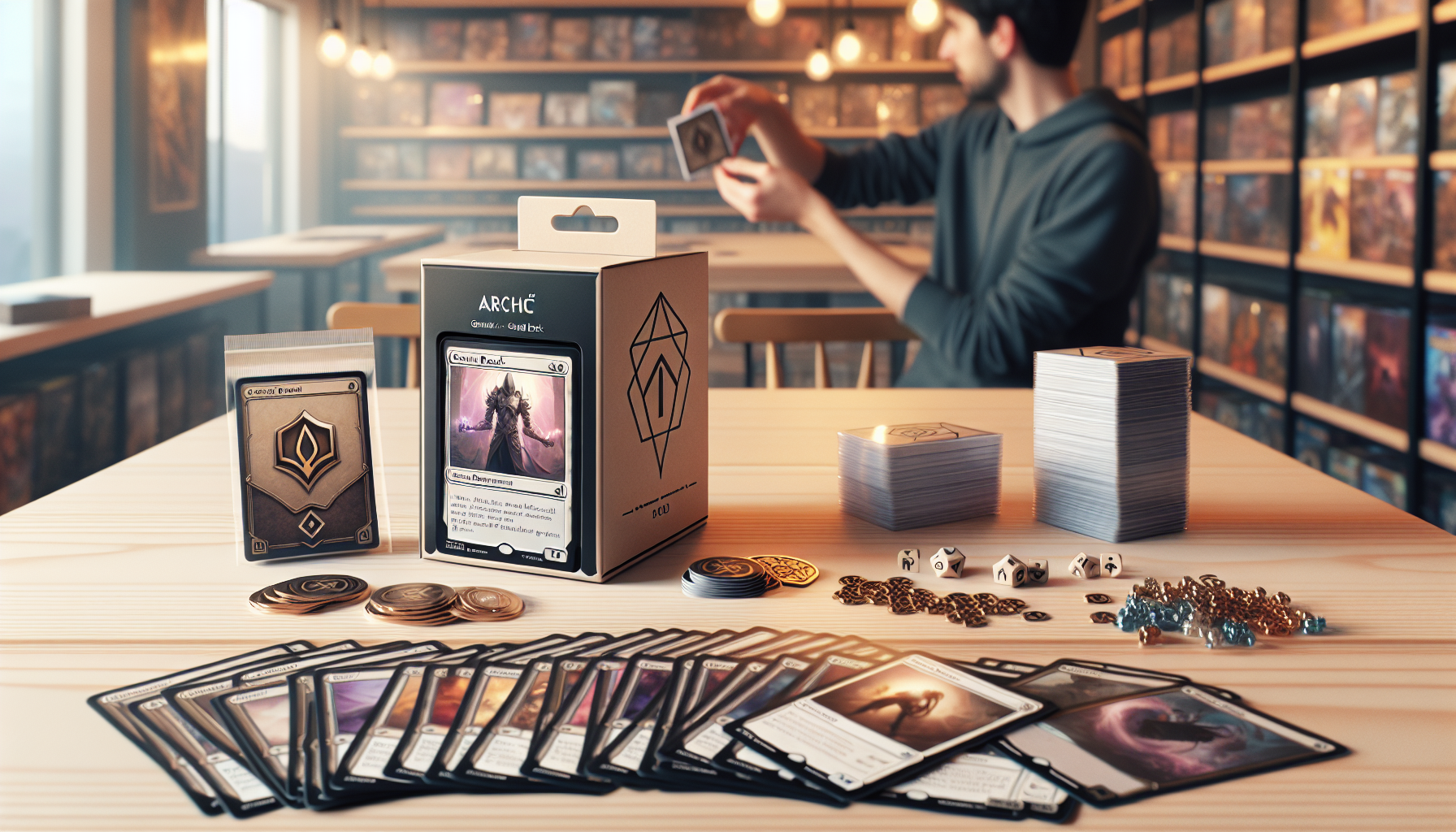
KeyForge stands out in the card game world with its uniquely generated decks: each Archon deck is pre-built, named, and practically impossible to copy exactly. For those who want to play more and build less, this means an extremely low barrier to entry—you open a deck and you're ready to go. At the same time, the system creates a meta where skill is about reading your own deck, understanding matchups, and making smart tempo decisions, rather than chasing the "best list."
Core Concepts that Make KeyForge Easy to Learn (but Hard to Master)
-
Unique Archon Decks: No deckbuilding, no singles purchases required to "catch up." You play with what you open and learn to maximize its strengths.
-
Three Houses per Deck: Each turn, you choose a house and play, use, and discard cards from that specific house—this creates a tactical puzzle where planning beats "luck."
-
Æmber and Keys: You win by forging three keys. Æmber is the currency, and control of æmber (stealing, capturing, denying) often decides the match.
-
Tempo and Chains: Tempo is about who threatens the next key first. Chains act as a built-in balancing mechanic in some formats and affect how many cards you draw.
Practical example: You buy two decks, open them, and can play immediately—perfect for game nights without deckbuilding or long preparations. After 1-2 matches, you'll often notice your deck's "plan": fast æmber rush, board control, or an engine of synergies.
Actionable insight: think "win condition" every turn
A simple habit that yields quick results: before each turn, link your choices to 3 keys. Ask yourself: "How do I forge my next key—and how do I stop theirs?" Prioritize actions that affect æmber control when your opponent approaches 6-7 æmber, even if it means playing fewer cards that turn. This is often how you win more KeyForge matches, regardless of the unique deck you have.
Getting Started with KeyForge – Best Starter Packs and What You Actually Need
The beauty of KeyForge is that the barrier to entry is low: you don't need to chase single cards or build a "perfect" list. To play in Sweden, all you practically need are two Archon decks (one each) and some way to track Æmber, damage, and keys. However, many top-rated guides miss the biggest beginner trap: buying the wrong starter level for how you actually intend to play (home game vs. store vs. tournament).
What you need for your first game night (minimum viable kit)
-
2 Archon decks: one per player; you can play immediately without preparation
-
Tokens/markers: for Æmber, damage, power, and status (e.g., stun/ward depending on the set)
-
Key tokens: three keys per player (or substitute with dice/coins initially)
-
Chain tokens: good to have when you start testing handicaps/formats and balancing decks
-
Quick rule reference: makes the first matches smoother than flipping through the full rulebook
Unique insight: if you lack "proper" tokens, it's perfectly fine to start with dice—but make sure you use different colors for Æmber and damage. This dramatically reduces misunderstandings as the pace increases.
Starter Set or just decks – how to choose right (and save money)
A Starter Set is best when you want "everything in the box": tokens, keys, and smoother onboarding. Buying Archon decks only is often the most cost-effective if you already have markers at home or want to maximize variation quickly. A practical setup for two is: Starter Set + 2 extra decks—you get both materials and multiple matchups immediately.
End with a simple purchase checklist before clicking order from Gamedungeon.se: budget, number of players, and whether you primarily play at home (more decks first) or in store/tournament (also prioritize sleeves and clear markers).
Buying KeyForge at Gamedungeon.se – How to Find the Right Products (and Make a Smart Choice)
When you're going to buy KeyForge in Sweden, the challenge is rarely finding "something," but rather choosing correctly among starters, Archon decks, and accessories without overspending. At Gamedungeon.se, you can quickly build a starting setup that suits your playstyle—whether you want a simple game night at home or aim for store play and sealed. The key is to understand what you actually get in each product and how it affects your first playing experience.
How to read the product range like a pro buyer
-
Choose edition (set) with purpose: New sets can offer different mechanics and "feel." For beginners, it matters less which set you start with—prioritize more decks for variety and learning.
-
Check language and content: Read the product description: is it a Starter Set (with tokens/rules) or an individual Archon deck? This is the most common misconception among new players.
-
Match accessories to needs: If you lack markers: choose a starter or supplement with tokens. Already have components? Put the budget towards 2-4 extra decks instead.
A practical example: if you want to play at home with friends, it's often smarter to buy four different Archon decks than to start with more expensive accessories. More decks = more matchups = faster understanding of tempo, æmber control, and "win condition" thinking. Sleeves, however, are a small cost that protects cards immediately, especially if you shuffle and play often.
A first shopping list that is almost always right
If you want to get started quickly via Gamedungeon.se, aim for: 2-4 Archon decks (at least two to play immediately) + sleeves + tokens/chain markers if you don't already have them. After that, you can upgrade with a playmat and deckbox when you know which decks become favorites.
KeyForge Rules in Practice: Turn Order, Tempo, and Common Mistakes
KeyForge looks simple on the surface, but many "rule questions" are actually about turn structure and priorities: when should you reap, when should you fight, and when must you slow down your opponent's key? Once you get into the routine, the game becomes faster, more fun, and you make fewer mistakes that cost matches—whether you're playing at home or at a store night in Sweden.
The turn order you should know by heart (and why it wins games)
The core is always: choose a house → play/use/discard cards from that house → draw up to hand size. This sounds obvious, but the best players use house choice as a "tempo tool." Focus on this every turn:
-
Choose house by effect, not by card quantity: A house with 2 strong actions can be better than 5 mediocre cards if it secures æmber or stops a key.
-
Reap vs. Fight: Reaping is often the standard to move towards 3 keys, but fight when you can remove threats that provide steal, capture, or recurring reap effects.
-
Play actions first when it affects your choices: Cards that remove an enemy or move æmber can change whether you should safely reap with your creatures.
An often-missed "pro thought" is that you don't just play your turn—you prepare for the next one. If you choose a house that empties your hand now, you can unlock an explosive next turn with another house.
Common beginner mistakes + a simple micro-routine
When your opponent has 6 æmber (key threat), your turn often needs to be about control, even if you "miss" a neat combo. Practical example: if you can steal/capture or clear a creature that would otherwise reap for a key, do that first—keys beat board state.
Micro-routine before each house choice (takes 10 seconds):
-
Can I reap safely and gain tempo?
-
Can I stop their key this turn? (steal, capture, æmber loss, force them to lose tempo)
-
Does this build a better next turn? (board state, hand quality, chain effect if relevant)
When you play like this, KeyForge becomes less "trial and error" and more a clear plan towards 3 keys—which is the fastest way to more wins.
Strategy and Match Plan – How to Win More KeyForge Matches with Your Unique Deck
In KeyForge, you'll go far by stopping thinking "my deck is good/bad" and instead asking: what is my match plan? Since you can't deck-build, skill is about quickly reading your Archon deck, playing for tempo, and making smart æmber control so you can forge three keys before your opponent.
Get to know your deck in 10 minutes (without overanalyzing)
A common gap in many guides is how you actually identify your plan early. Do this after your first read-through and 1 test match:
-
Find your primary path to æmber: count "easy reap-turns," æmber on cards, and recurring generation. If you can often reach 6-8 æmber in 1-2 turns, you have a rush profile.
-
Identify your interaction: look for steal, capture, tax/increased key cost, board clears, and "stun/taunt"-like tempo tools. If you lack these, you need to play more proactively and force the race.
-
Mark your key cards: 3-5 cards that either flip the board or create an engine (replay, draw cards, recurring æmber). Write them down – your tactic will be to maximize turns where you see them often.
Practical example: If your deck has a lot of æmber generation but weak steal, choose houses that provide æmber now and press key threats early. You win more matches by "counting key turns" than by building a big board that gets removed anyway.
Play for tempo – and use "chains" as a tool, not a disadvantage
Tempo in KeyForge is often "how many good actions do you get per turn?" If you have a strong engine, you can sometimes accept chains (in formats where they occur) or a turn with a poorer house choice to create a future turn that forges a key more safely.
Actionable insight: Make a simple "deck note" after each match: best house, most common way you lose, and your plan when the opponent is at 6 æmber. After 5 matches, you'll have a clear match plan – and wins usually follow immediately.
Section 6: Formats, Tournaments, and Community in Sweden – Play KeyForge More (and Have More Fun)
Once you know the basics, the next step is to find the right format and a community that matches your level. This is where KeyForge truly shines: because the decks are pre-built (and unique), the barrier to showing up for a game night is low, while there's plenty of depth for those who want to compete. In Sweden, sealed (open and play) and Archon (bring your own deck) are often seen to dominate, precisely because they are easy to arrange and fair for new players.
Common KeyForge formats – and what they train in you
-
Casual at home: Perfect for learning turn order and timing without stress – try "best of three" and switch decks after each match for a quick meta feel.
-
Store play/leagues: Builds habit and match awareness. You quickly learn how different houses and tools for æmber control behave in real matches.
-
Sealed: Most beginner-friendly in organized play. Everyone starts with "what they happen to open," which shifts the focus to quick deck evaluation and basic plan.
-
Archon: Best when you want to master a specific deck over time—matchups, tempo, and when to play for board vs. keys.
What's often missing in guides is how to do a quick, practical sealed analysis in 3-5 minutes. Look for: 1) stable æmber generation (reap + bonus), 2) at least a few ways to stop key threats (steal/capture/remove æmber), 3) some form of board reset (fight/board wipes) so you don't get overrun.
Sealed checklist + community tips that actually work
Set a simple initial match plan: "Can I build key 1 quickly, and do I have answers when my opponent reaches 6 æmber?" A concrete goal that yields results is to play 5 matches with the same deck before you judge it—KeyForge rewards learning lines and matchup adjustments.
To find games in Sweden: keep an eye on store events, local groups, and community channels. And when you want to stock up on decks for sealed/league play, it's convenient to consolidate your purchases through Gamedungeon.se so you always have a couple of "fresh" decks ready for the next night.
Accessories and Maintenance for KeyForge – Protect Your Decks and Play Smoother
KeyForge decks are unique and often difficult to replace – therefore, accessories and simple care are more than "nice-to-have." Top-ranked guides almost always highlight sleeves and clear markers as the first upgrades, but often miss how to build a routine that makes game nights flow faster (and ensures your favorite decks last in the long run). Here's a practical overview of what provides the most value, whether you play at home, in a store, or at a tournament.
Must-have vs. nice-to-have (prioritize correctly from the start)
-
Sleeves (card protectors): The most important purchase. KeyForge involves a lot of shuffling, and unprotected cards quickly get white edges. Choose matte sleeves for better grip and less glare.
-
Deckbox: Protects the deck in your bag and makes it easy to bring 2-4 decks. Feel free to write the deck name and set on a small label.
-
Tokens/markers: Good æmber, damage, and capture markers reduce rule errors and save time. If you lack originals: get a token kit that is easy to read on the table.
Practical example: Always sleeve your "go-to" deck first. For test decks, you can use simpler sleeves, but upgrade when you notice you play it often.
Organization and long-term care (underestimated competitive advantage)
Many articles talk about protection – fewer talk about organization. If you own more than 6 decks, structure quickly becomes a game changer: store each deck with a small note detailing its "game plan" (rush/control/engine) and 1-2 key cards to look for. Also, make it a habit to count tokens after each game so nothing goes missing.
Build a "game night box" that's always ready
Assemble a box with 4-6 randomized Archon decks, tokens, chain markers, key markers, and a brief rule reference. Then you can play KeyForge anywhere – at home, with friends, or at events – without repacking every time.
Frequently Asked Questions (FAQ) about KeyForge and Gamedungeon.se
Q: Is KeyForge good for beginners even if I've never played a card game?
A: Yes. KeyForge is unusually beginner-friendly because you don't need to deck-build – you buy a unique Archon deck and can play immediately. What usually feels most difficult at first isn't the rules, but understanding tempo: when to reap for æmber and when you must stop your opponent's key threat. Tip: focus on the goal (3 keys) and learn the 5-6 most common keywords on the cards.
Q: How many decks do you need to get started at home?
A: The minimum is 2 decks (one per player). For better variation, 4 decks total are recommended, so you can switch and try different playstyles. If you don't have anything already, a Starter Set is often the most cost-effective as you get tokens and markers that make the gaming experience smoother from the start.
Q: What is the difference between a Starter Set and buying individual Archon decks?
A: A Starter Set provides "everything else": tokens, key/chain markers, and rule support, which saves time and reduces friction during the first game night. Individual Archon decks are perfect if you already have the accessories or if you want to expand your collection quickly with more unique decks.
Q: How do I know which KeyForge edition (set) to buy on Gamedungeon.se?
A: Read the product description and look for the edition/set, language, and what's included. If you're new: choose a set that is readily available so you can buy more decks from the same period and compare. Most important, however, is not the "right set" but that you get more matches – KeyForge rewards experience with your own deck.
Q: What are the most common beginner mistakes in KeyForge?
A: Three classics: 1) choosing a house just to play many cards, 2) ignoring æmber control when the opponent approaches 6, and 3) building a board without a plan for keys. Have a quick routine before each house choice: Can I reap safely? Can I stop their key? Am I improving my next turn?
Q: Are sleeves and a deckbox "must-haves" for KeyForge?
A: For frequent play: yes, sleeves are highly recommended because the decks are unique and wear affects both feel and fairness. Start by sleeving your favorite or tournament deck first, and complement with a simple deckbox for transport.
Q: How do I quickly prepare for a sealed tournament in Sweden?
A: Play 1–2 quick test hands and look for: stable aember generation, at least a few ways to disrupt (steal/capture/remove), and a plan for the first key. In sealed, "stable and consistent" often wins over flashy combos—prioritize cards that keep you close to 6 aember while also slowing down your opponent.
Next step: make KeyForge your new favorite for game night
KeyForge stands out in the card game world thanks to its unique deck system: you avoid deckbuilding, but still get deep strategy around house choices, tempo, and aember control. With a focus on always playing towards the game's win condition – forging three keys – it quickly becomes clear why the game is easy to start and difficult to master. Add smart routines (like the three-question check before each turn) and simple deck notes, and you'll noticeably improve in just a few matches.
If you want to get started right away: choose a starter that suits you (Starter Set or 2–4 Archon decks), learn the turn order, and give the same deck at least five matches before you judge it. Then upgrade with sleeves and a "game night box" when you know what you like. Explore the KeyForge range at Gamedungeon.se and find a deck that matches your playstyle – casual, sealed, or tournament-oriented.